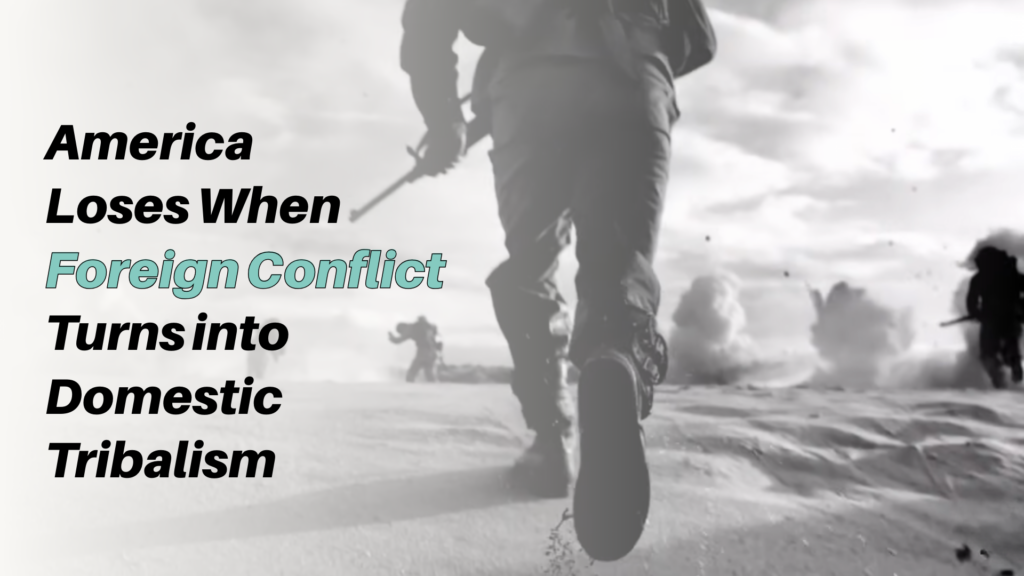
When international conflicts erupt, Americans often process them through partisan lenses. This means that extremely complex geopolitical events can quickly get reduced to a “right side/wrong side” framing. That dynamic makes thoughtful conversation about these issues harder, which in turn can stunt our ability to resolve them.
If you’ve even glanced at a screen in the last two weeks, you likely know that the United States is again engaged in a foreign conflict. Not a new one, but one that has waxed and waned in intensity and progress for many years. As of writing, it’s been two weeks since President Trump ordered renewed strikes on the Islamic Republic of Iran. And the rush by lawmakers and pundits to justify or object to that decision was swift.
But no discussion on this issue will be effective if it does not first acknowledge the human cost that has already been paid. American troops, Iranian schoolchildren, combatants and civilians alike, any lives lost are a tragic consequence of military conflict. As Americans are watching these developments unfold in real time, it’s no surprise that people are coming to different conclusions about each part of our involvement and correct course of action. Questions about war, national security, and foreign policy are among the most consequential debates that can be had in a democratic republic. In moments like these, disagreement is inevitable and healthy.
However, a major problem arises when these sincere disagreements over foreign involvement turn into fuel for domestic tribalism. When this happens, the public debate can tend to shift from “which is the best path forward?” to “which political side is right?” And on social media, where information travels (and gets distorted) faster, this effect is only accelerated.
So how can we try to prevent tribalism from taking hold this time?
Let’s start where BridgeUSA’s focus lies: on campus. Across the country, BridgeUSA chapters have already begun hosting discussions where college students can engage these issues thoughtfully.
One such example is our chapter at the University of Illinois Urbana-Champaign. Adam Bachrach, the chapter president, told us that their discussion went very well. “While we had some disagreement, the norms we set at the beginning of the discussion helped guide the disagreement into curiosity between the two people and their opinions,” Adam said.
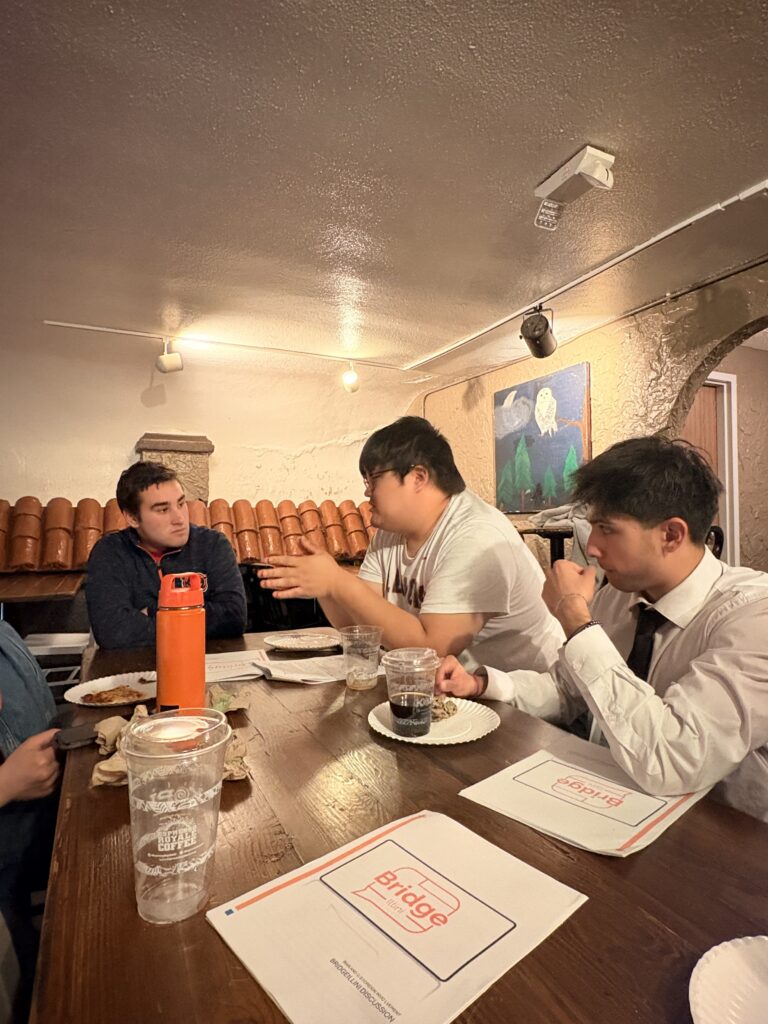
That’s the goal of these and any BridgeUSA discussions: Bring students with different perspectives together so they can understand those differences instead of dismissing them. The BridgeUSA formula is simple. Students acknowledge complexity. They show respectful disagreement. This leads to a culture shift. It may seem small, but apply this lesson at scale and our politics won’t seem as dark, even in the midst of a global military conflict.
Disagreement is and will remain inevitable, especially when it comes to foreign policy and especially during crises. But we could navigate that disagreement better if we learned to listen and to avoid retreating into our partisan camps. As Adam from UIUC said, “Although the disagreement wasn’t resolved, the two participants agreed to disagree and the conversation continued.”
We need conversation to continue now more than ever.
Help us ensure that it does.
Want to get in on the action?